About Cisco Certification
Introduction to Cisco certifications
Cisco certifications are widely recognized across the world as some of the most valuable qualifications in the networking and IT industry. These certifications are created to help individuals develop the practical skills and technical knowledge needed to work with modern computer networks, cybersecurity systems, cloud technologies, and enterprise infrastructure.
In today’s digital world, almost every organization depends on secure and reliable networks to run daily operations. From small businesses to multinational companies, there is a growing demand for professionals who can manage, secure, and troubleshoot network systems efficiently. Cisco certifications provide a clear learning path for beginners as well as experienced IT professionals who want to strengthen their careers and stay competitive in the technology industry.
Why Cisco Certifications Are Important
Cisco certifications are highly valued because they focus on both theoretical concepts and practical hands-on experience. Certified professionals gain real-world networking knowledge that helps them perform effectively in enterprise environments. Employers often prefer Cisco-certified candidates because they demonstrate proven technical competency and industry-standard networking skills.
Some major benefits of Cisco certifications include:
- Global recognition in the IT industry
- Better career opportunities
- Higher salary potential
- Improved networking and security skills
- Practical troubleshooting knowledge
- Professional credibility and confidence
Cisco certifications are suitable for students, fresh graduates, IT support professionals, network engineers, cybersecurity experts, and experienced IT administrators.
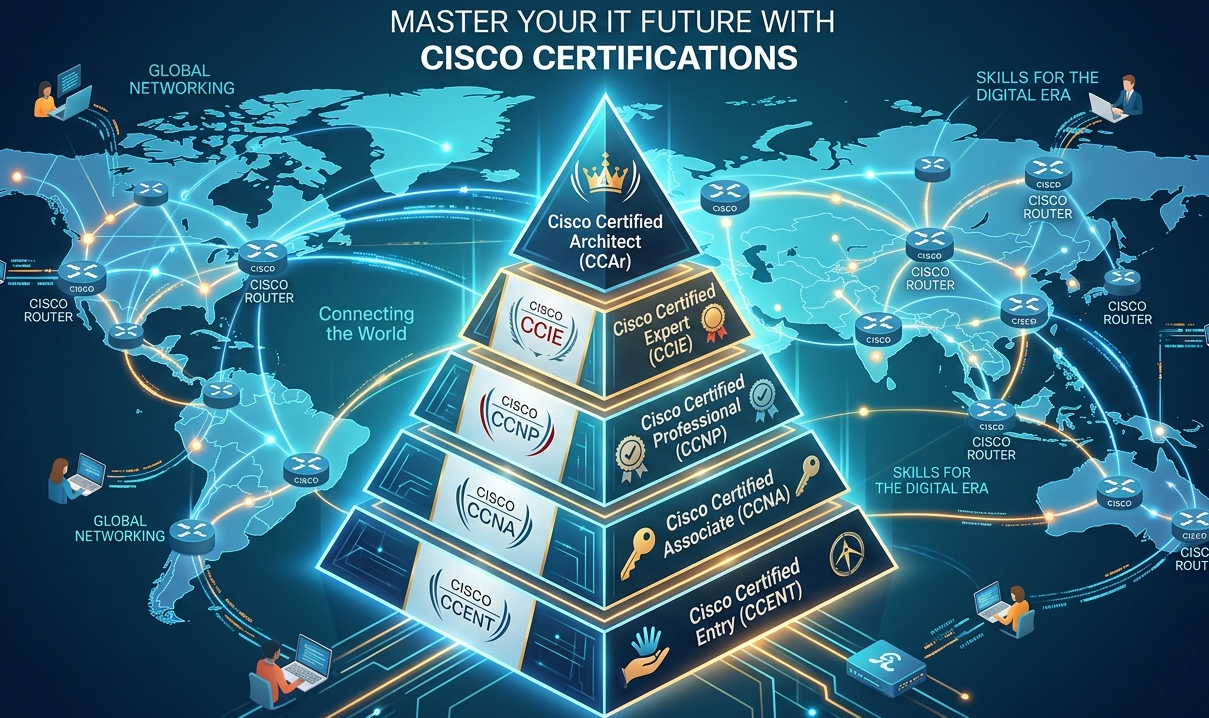
Levels of Cisco Certifications
Cisco offers certifications at multiple levels, allowing professionals to progress step by step according to their experience and career goals.
CCENT (Cisco Certified Networking Entry Technician) | Entry Level Cisco Certification
The Cisco Certified Entry Networking Technician (CCENT) was an entry-level networking certification offered by Cisco for individuals beginning their journey in the IT and networking industry. Although the certification has now been retired, it is still remembered as an important starting point for many successful networking professionals.
The following basic concepts of networking and security are covered in CCST certification:
- Basic networking concepts
- IP addressing
- Network devices
- Cybersecurity fundamentals
- Troubleshooting basics
CCNA (Cisco Certified Network Associate) | Associate Level Certification
The CCNA is one of the most popular networking certifications in the world. It validates the ability to install, configure, operate, and troubleshoot medium-sized networks. It is the associate-level certification that is intended for individuals who want to build foundational networking knowledge and practical technical skills.
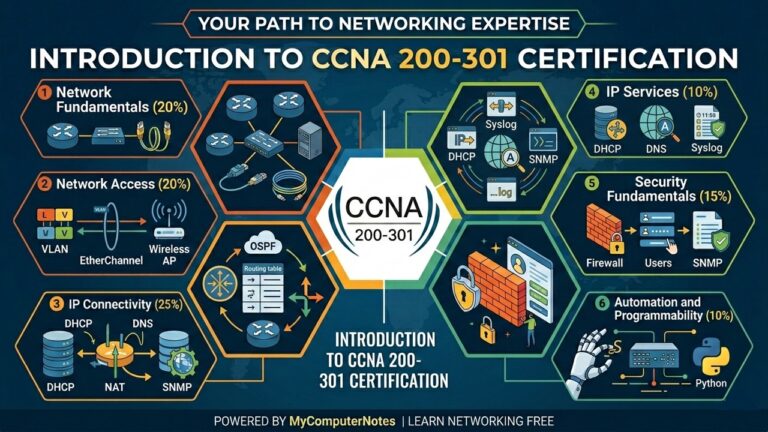
Topics covered in CCNA are:
- Network fundamentals
- Switching and routing
- IP connectivity
- Wireless networking
- Security fundamentals
- Network automation
- Troubleshooting techniques
The certification prepares candidates for job roles such as:
- Network Administrator
- Technical Support Engineer
- Junior Network Engineer
- System Support Technician
CCNP (Cisco Certified Network Professional) | Professional Level Cisco Certification
The CCNP certification is designed for experienced networking professionals who want advanced technical expertise. It focuses on advanced networking technologies and enterprise-level solutions. Candidates typically choose a specialization based on their career interests.
Popular CCNP tracks include:
- CCNP Enterprise
- CCNP Security
- CCNP Data Center
- CCNP Collaboration
- CCNP Service Provider
Topics covered may include:
- Advanced routing and switching
- Network security
- Automation and programmability
- Enterprise infrastructure
- VPN technologies
- Wireless networking
CCIE (Cisco Certified Internetwork Expert) | Expert Level Certification
The CCIE certification is the expert-level certification and is the highest achievement in the networking industry. It is recognized worldwide as a prestigious and highly challenging networking credential. It demonstrates expert-level skills in designing, implementing, managing, and troubleshooting complex network infrastructures.
CCIE tracks include:
- Enterprise Infrastructure
- Security
- Data Center
- Collaboration
- Service Provider
- Wireless
The certification process involves:
- A written examination
- An intensive hands-on lab exam
CCIE-certified professionals are highly respected and often work in senior technical leadership roles.
Career opportunities include:
- Network Architect
- Senior Infrastructure Engineer
- Technical Consultant
- Enterprise Network Specialist
CCAr (Cisco Certified Architect) | Highest Level of Cisco accreditation
The Cisco Certified Architect (CCAr) certification is the highest level of Cisco accreditation. It is designed for professionals who create large-scale enterprise networking solutions and IT infrastructure strategies.
CCAr professionals are responsible for:
- Designing complex enterprise networks
- Creating technology strategies
- Managing large IT infrastructures
- Aligning business and technical requirements
Career Opportunities After Cisco Certification
Cisco-certified professionals are in demand across industries such as:
- Information Technology
- Telecommunications
- Banking and Finance
- Healthcare
- Government Organizations
- Cloud Service Providers
Common job roles include:
- Network Engineer
- Security Analyst
- Cloud Network Engineer
- Technical Support Engineer
- Infrastructure Administrator
- Cybersecurity Specialist
- Solutions Architect
Conclusion
Cisco certifications provide a strong foundation for building a successful and rewarding career in networking and information technology. From beginner-level certifications like CCST and CCNA to advanced credentials such as CCNP, CCIE, and CCAr, Cisco offers certification paths for professionals at every stage of their careers.
These certifications not only enhance technical skills but also improve career growth, earning potential, and professional recognition in the global IT industry. As technology continues to evolve, Cisco-certified professionals remain highly valuable in designing, securing, and managing modern digital networks.
The CCNA (Cisco Certified Network Associate) is a globally recognized networking certification offered by Cisco. It validates foundational networking skills such as routing, switching, IP connectivity, security, automation, and troubleshooting.
CCNA is ideal for:
Students interested in networking
IT beginners
Technical support professionals
Network administrators
System engineers
Anyone looking to start a career in networking and cybersecurity
There are no mandatory prerequisites for CCNA certification. However, having basic knowledge of computers, networking concepts, and IP addressing can make learning easier.
The CCNA exam includes topics such as:
Network fundamentals
IP connectivity
Routing and switching
Wireless networking
Network security
Automation and programmability
Troubleshooting
Currently, candidates only need to pass one exam:
CCNA 200-301
This single exam covers all core networking concepts.
CCNA certification is valid for three years. After that, candidates must renew it by:
Passing a recertification exam
Earning continuing education credits
Completing a higher-level Cisco certification
CCNA-certified professionals can apply for roles such as:
Network Engineer
Technical Support Engineer
Network Administrator
System Administrator
IT Support Specialist
Junior Security Analyst
After CCNA, candidates often pursue the following:
CCNP Enterprise
CCNP Security
Cybersecurity certifications
Cloud networking certifications
Automation and DevNet certifications

One Comment